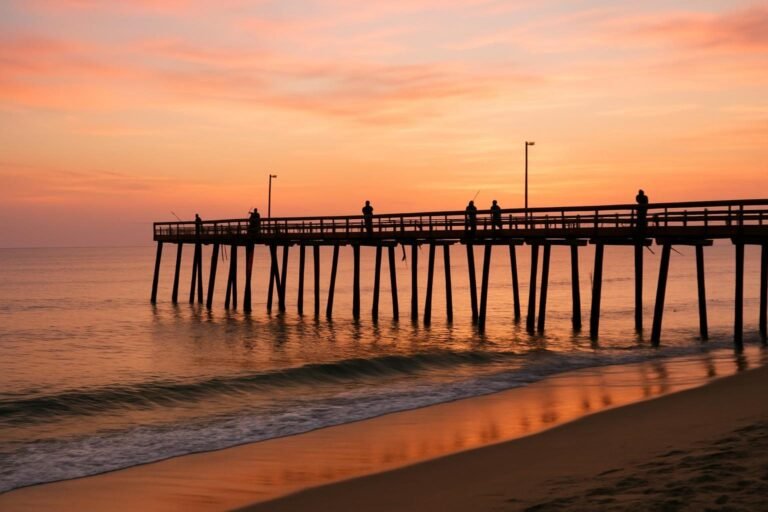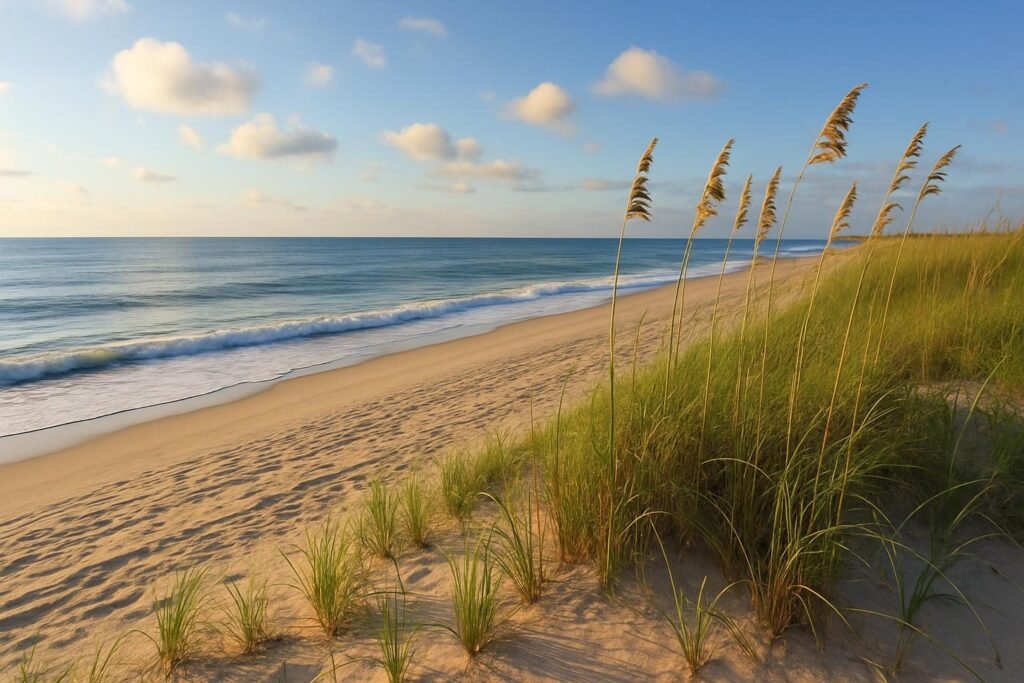
Quick answer: Crystal Coast weather by month runs from mild, breezy winters (highs in the 50s) to hot, humid summers (highs in the upper 80s) with ocean water that warms into the 80s by August. The best all-around months are May, June, September and October. Hurricane season runs June 1 to November 30, and the peak risk is mid-August through early October.
Key takeaways
- Winters are mild but windy and damp. Freezing days happen, snow is rare and rarely sticks.
- Ocean swimming is comfortable roughly late May through September; water peaks in August.
- Humidity is the real summer story. The thermometer says upper 80s, the heat index says something else.
- September is hot, beautiful and the busiest month for tropical storm risk. October is often the sweet spot.
- The best months for moving are usually March through May or October through November, mostly for comfort and avoiding peak storm and tourist season.
The Crystal Coast sits where the Atlantic, Bogue Sound and Core Sound moderate the temperature. That means winters are gentler than inland North Carolina and summers are a little breezier than Raleigh or Greenville. It also means salt air, humidity and the occasional storm are part of the deal. The figures below are typical ranges, not forecasts, so check the National Weather Service for current conditions.
Crystal Coast Weather by Month: The Quick Table
Use this as a planning snapshot. Daytime highs and lows are approximate averages for the Morehead City and Beaufort area, and ocean temperatures are typical ranges for the surf off Bogue Banks. Individual days can swing well outside these numbers.
| Month | Typical high / low (°F) | Ocean temp (°F, approx.) | What it feels like |
|---|---|---|---|
| January | mid-50s / mid-30s | low 50s | Cool, breezy, occasional freezing nights |
| February | upper 50s / upper 30s | low 50s | Still cool, can be wet and gray |
| March | mid-60s / mid-40s | mid-50s | Wild swings, windy, early spring |
| April | low 70s / mid-50s | low 60s | Pleasant, comfortable, pollen season |
| May | upper 70s / low 60s | upper 60s | Warm, gets sunny, humidity creeping in |
| June | mid-80s / upper 60s | mid-70s | Hot and humid, beach season in full swing |
| July | upper 80s / low 70s | upper 70s to low 80s | Hottest stretch, afternoon storms common |
| August | upper 80s / low 70s | low 80s | Hot, sticky, warmest water, rising storm risk |
| September | mid-80s / upper 60s | upper 70s to low 80s | Still summer, peak tropical season |
| October | upper 70s / upper 50s | low 70s | Warm days, cooler nights, drier air |
| November | upper 60s / upper 40s | upper 50s to 60 | Crisp, quiet, first real chill |
| December | upper 50s / upper 30s | mid-50s | Cool, damp, holiday lights on the waterfront |
Bogue Sound and Core Sound warm and cool faster than the open ocean, so sound-side water can feel several degrees different from the surf at the same time of year. Shallow creeks and marsh edges can get very warm in July and August.
Winter: December Through February
Winter here is mild compared with most of the country, but it is not tropical. Expect damp, windy days, bright cold mornings and the occasional hard freeze. Snow is uncommon, and when it does fall, it usually melts quickly. Visiting in the colder months? See our guide to holiday events on the Crystal Coast.
- Best for: quiet beach walks, birding, historic Beaufort without the crowds, and a lower-priced weekend away.
- Watch for: northeasters that bring wind, rain and some coastal flooding, especially along NC-58 and low spots near the sound.
- Water temperature: cold enough that swimming is off the table for most people.
- Practical note: some seasonal restaurants and shops cut hours or close, so check before you drive out to Down East or the beach.
Winter is also when you find out how your house handles cold, damp air. Crawl spaces, pipes and heating systems all get tested, which is why crawl space moisture is a common topic among local homeowners.
Winter on the Crystal Coast is cool and breezy rather than cold, and the crowds disappear before the weather turns.
Spring: March Through May
Spring arrives in fits and starts. March can feel like winter one day and May the next. By April the days are comfortable, and by May the coast starts to feel like summer without the worst of the heat.
March and April
These are the windiest months, and the ocean is still far too cold for swimming. Fishing picks up as water warms, and the Beaufort waterfront, Fort Macon State Park and the trails around Cape Carteret and Cedar Point are pleasant for walking. Pollen coats cars and porches in April, so allergy sufferers should plan accordingly.
May
May is one of the best months on the coast. Highs are in the upper 70s, humidity is manageable, and the beach is open without the full summer crowds. The water is still brisk, but wading and dipping are realistic late in the month. Memorial Day weekend marks the shift to full beach-season traffic on NC-24 and NC-58.

Summer: June Through August
Summer is hot, humid and busy. A sea breeze keeps the beaches a few degrees cooler than inland towns, but the heat index regularly feels well above the actual temperature. Afternoon thunderstorms roll in quickly, usually pass within an hour and are a good reason to wrap up beach time early.
- Ocean temperature: comfortable by mid-June, warmest in August.
- Humidity: high all day, heaviest in July and August.
- Storms: pop-up thunderstorms are routine. Lightning is a real hazard on open beaches and on boats.
- Crowds: expect traffic on US-70 and the Atlantic Beach bridge, and book summer rentals well ahead.
- Jellyfish and rip currents: both are part of summer surf. Follow posted flags and lifeguard guidance.
Local tip: Go to the beach early or after 4 p.m. The midday sun is brutal, afternoon storms are common, and the water is just as warm in the evening.
Summer is also the season for events and boating. The Big Rock Blue Marlin Tournament fills Morehead City in June, and the best beaches get busy fast. Our town-by-town beach guide helps you pick a stretch that fits your tolerance for crowds.
Hurricane Season on the Crystal Coast
The Atlantic hurricane season runs June 1 through November 30. The Crystal Coast sticks out into the Atlantic, so it takes more direct and near-miss storms than many parts of the state. Most seasons bring at least a few tropical systems that affect our weather, even when no major hurricane makes landfall.
- June and July: early storms are usually weaker and less frequent.
- Mid-August through early October: peak risk. Water is at its warmest and storms have the most fuel.
- Late October and November: risk drops but does not disappear.
Storm surge and flooding are often a bigger problem than wind, especially for low-lying areas on Bogue Banks, Harkers Island and along the sounds. Know your flood zone and your evacuation route before the season starts. For a deeper look, see our upcoming guide to hurricane season in Carteret County, and use the hurricane prep checklist to get your home ready. For official forecasts and watches, use the National Hurricane Center.
The calendar says hurricane season starts in June, but the real risk window is mid-August through early October.
Fall: September Through November
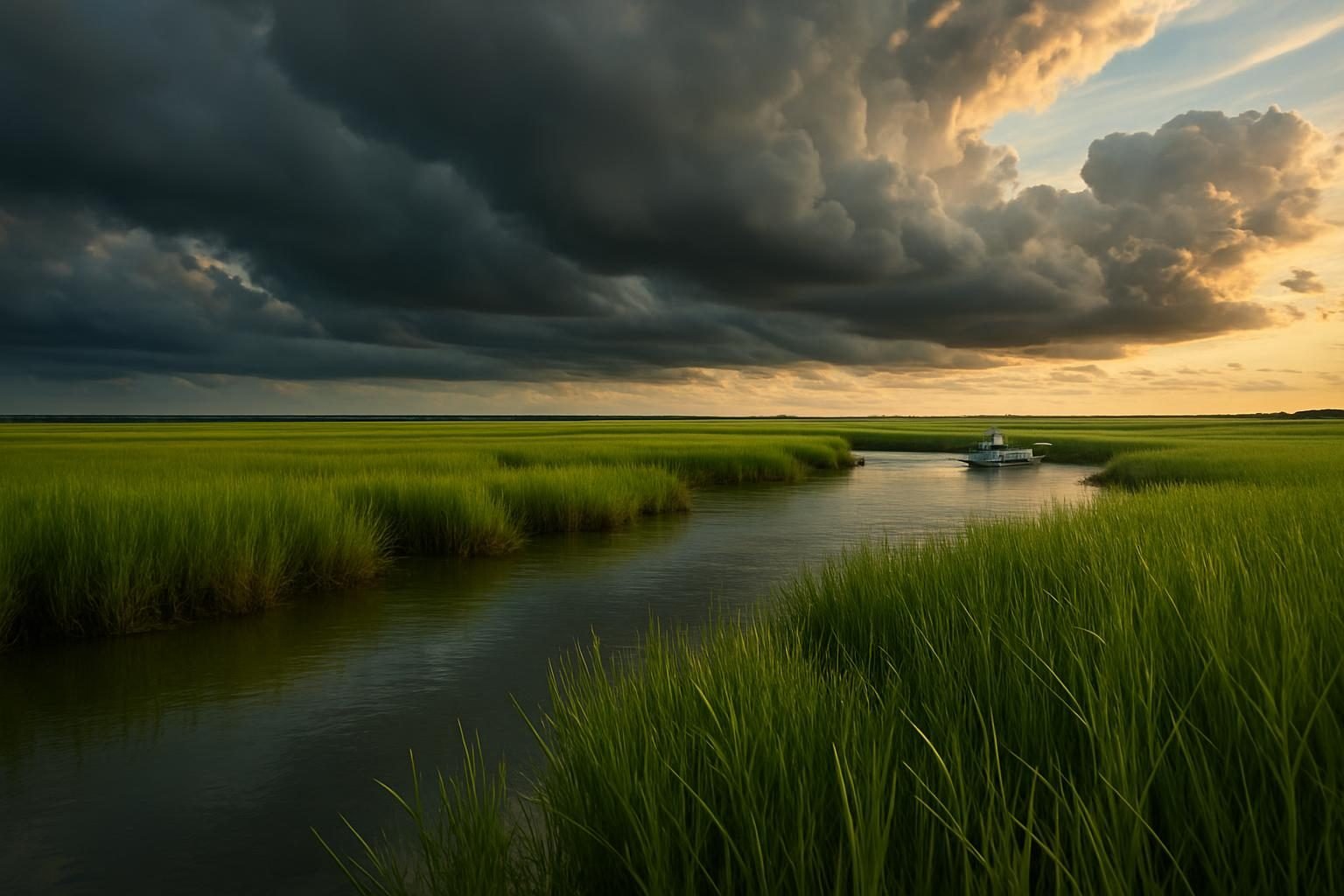
Fall is the season many locals look forward to all year. September is still summer in practice, with hot days, warm water and peak storm risk. By October, the air dries out, the nights cool off, and the light turns golden over the marsh.
September
Warm water makes for great swimming, and beaches thin out after Labor Day. The trade-off is that this is prime tropical season, so build flexibility into trip plans and consider travel insurance for rentals.
October
October is often the best month of the year. Highs are in the upper 70s, humidity drops, and the water is still swimmable early in the month. The NC Seafood Festival brings crowds to the Morehead City waterfront, so check the official dates and plan parking ahead.
November
November is quiet, crisp and uncrowded. It is a good month for oysters, which are at their best when the water cools. See what’s fresh in our month-by-month seafood guide.
Best Months for Beach, Fishing and Moving
The “best” month depends on what you want. This breakdown covers the most common goals.
- Beach and swimming: June through September, with late June and early September offering the best mix of warm water and manageable crowds.
- Comfortable beach walks without swimming: May and October.
- Fishing: it is a year-round pursuit, but species change by season. Spring and fall are productive for many inshore fish, summer is prime for offshore trips, and winter has its own quieter fishery. We’ll cover this in detail in fishing on the Crystal Coast.
- Exploring Beaufort and the waterfront: April, May, October and November.
- Moving here: March through May or October through November. Temperatures are easier on movers, moving-truck availability is better, and you avoid peak summer traffic and the heart of hurricane season.
If you’re planning a relocation, our guides to living in Beaufort, living in Morehead City and living in Emerald Isle show how each town handles the seasons. For the bigger picture, start at the Events & Seasons hub, and when you’re ready, read moving to Carteret County.
What the Weather Does to Your House
Weather on the coast is a maintenance issue as much as a comfort one. Salt air, humidity and wind shape how homes age here.
- Salt air: accelerates corrosion on outdoor HVAC units, railings and hardware. See salt air and HVAC corrosion.
- Humidity: drives mold, mildew and crawl space moisture if ventilation and vapor control are poor.
- Wind and storms: test roofs, windows and doors. Homeowners often look into wind mitigation for roofs and keep a plan for storm damage repair.
Our Home & Property hub collects more on keeping a coastal home in good shape.
Rainy Days and Bad-Weather Plans
Rain here is often short and heavy in summer and longer and grayer in winter. When the weather turns, you have options. Our list of rainy day things to do on the Crystal Coast covers museums, indoor spots and low-key ideas.
For ferries and trips to Cape Lookout National Seashore, check wind and sea conditions before you go. Rough water and wind can cancel or delay crossings, and the National Park Service posts current information at nps.gov/calo.
FAQ
What is the hottest month on the Crystal Coast?
July and August are the hottest, with highs in the upper 80s and a heat index that often feels much higher because of humidity. Ocean water peaks in August.
When is the ocean warm enough to swim?
Most people find the Atlantic comfortable from about late May or June through September. The warmest water is typically in August, and early October can still be pleasant.
When is hurricane season and when is it worst?
Hurricane season runs June 1 through November 30. The highest risk for the Crystal Coast is typically mid-August through early October. Check the National Hurricane Center for current forecasts.
Does it snow on the Crystal Coast?
Rarely. Winters are mild, and most precipitation falls as rain. Occasional light snow or ice can occur, but it usually melts quickly. If you’re planning a cold-season visit, see our guide to things to do on the Crystal Coast in winter.
What is the best month to visit?
May and October are favorites. You get warm days, lower humidity, fewer crowds and lower storm risk than late summer. For swimming, late June and early September are hard to beat.