Quick answer: After a storm, make everyone safe first, then stop further damage with a temporary tarp or board-up, photograph everything, and call your insurer before you sign anything. For permanent storm damage repair on the Crystal Coast, hire a licensed, insured local contractor who has an established presence in Carteret County, not a door-knocker who arrived with the storm.
Key takeaways
- Safety comes first: downed lines, standing water, gas smells and unstable roofs are not DIY situations.
- Temporary protection (tarps, board-ups) is usually covered and expected by insurers, so keep receipts.
- Photograph and video everything before you move or discard damaged items.
- Never pay a large deposit to a contractor who knocked on your door.
- Large NC projects require a licensed general contractor, and repairs usually need local permits.
Living on the coast means eventually dealing with wind, water or both. Whether it was a named hurricane, a nor’easter or a nasty summer thunderstorm, the first 72 hours shape how smoothly the repair goes. This guide walks through the order we would follow, from Emerald Isle to Harkers Island.
If you would rather hand off the legwork, you can request help with storm damage repair from a vetted local pro using the form on this page.
Step 1: Make everyone safe before you touch anything
Your house can be repaired. You cannot. Before you walk the property, check for the hazards that cause the most injuries after coastal storms.
- Downed or sagging power lines: Treat every line as live. Stay well back and report it to the utility.
- Gas smell: Leave the house, then call the gas company or 911 from outside. Do not flip switches or light anything.
- Standing or flood water: It can hide debris, carry sewage and energize wiring. If water reached outlets or the electrical panel, keep the power off until an electrician clears it.
- Damaged roofs, ceilings and trees: A ceiling holding water can drop without warning. Leaning or cracked trees can fall days later.
- Generators: Run them outdoors, well away from windows, never in a garage or on a porch. Carbon monoxide is a real post-storm killer.
If the storm forced an evacuation, wait for the all-clear from local officials before returning. Bridges, NC-58 and low stretches of US-70 can stay restricted after a major event. Our whole house generator guide covers backup power for the next one, and the resident’s guide to hurricane season in Carteret County covers preparation and re-entry.
Step 2: Stop further damage with temporary protection
Most insurance policies expect you to take reasonable steps to prevent additional loss. That is usually called “mitigation,” and the cost is normally part of the claim. Keep every receipt.
What temporary protection looks like
- Roof tarping: Heavy-duty tarps secured over damaged sections, ideally fastened to solid framing rather than just weighted down.
- Board-ups: Plywood over broken windows and doors.
- Water extraction: Pulling standing water and starting to dry out affected rooms.
- Moving contents: Relocating furniture and valuables from wet areas to dry ones.
Tarping a pitched or wet roof is dangerous work. Roofs slick with rain, soft decking and loose shingles cause falls every storm season. If you are not comfortable, a professional can do it quickly, and that is money well spent.
Local tip: Salt air and humidity mean wet drywall and insulation can grow mold fast on the coast, often within a couple of days. Do not wait for the adjuster to start drying things out. Photograph first, then dry.
If water got inside, our guide to water damage restoration in Morehead City explains what to do first and what restoration crews actually do.
Step 3: Document everything for your insurance claim
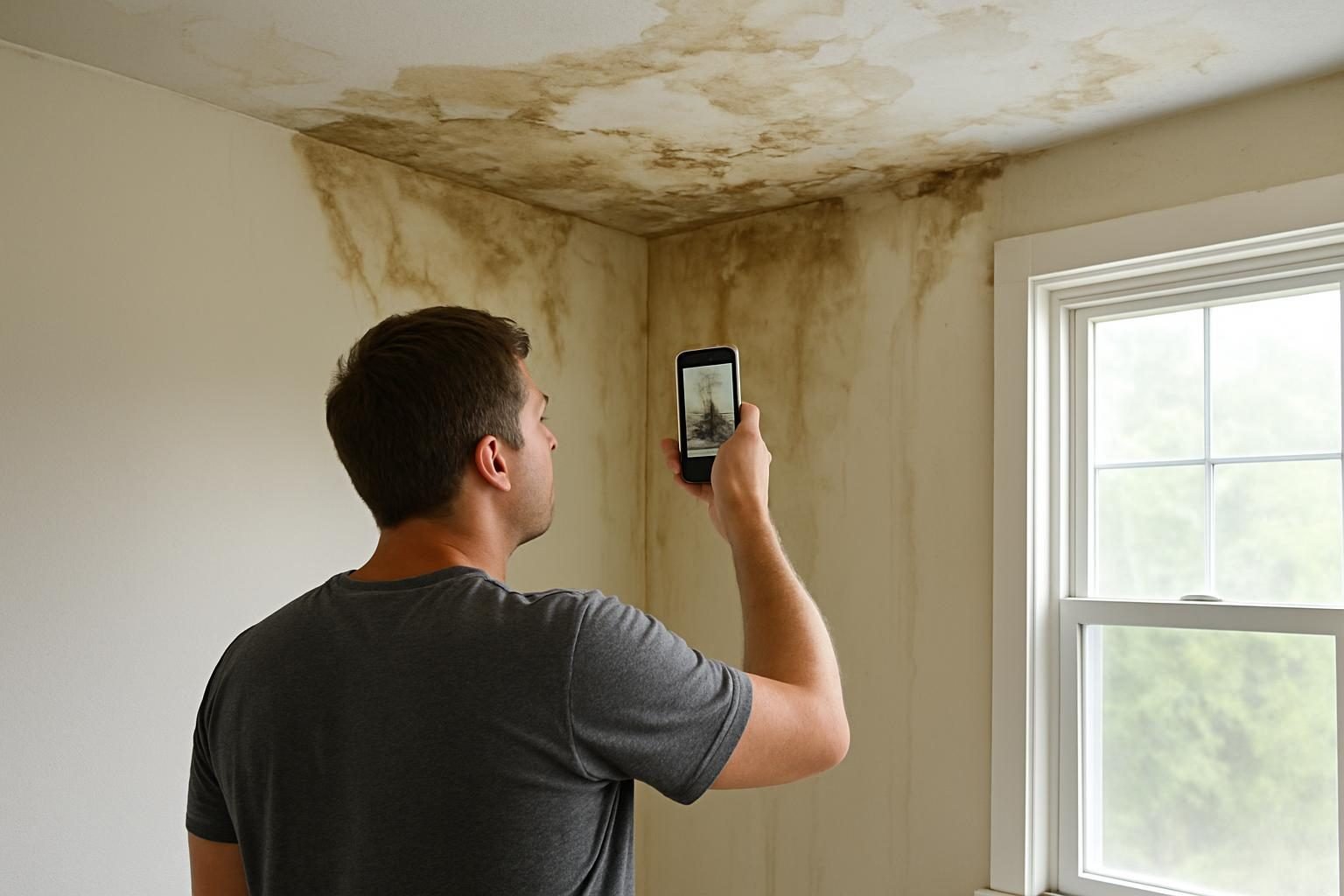
Good documentation is the difference between a smooth claim and a long argument. Do it before cleanup, and do it even for damage that looks minor.
- Take wide shots, then close-ups of every damaged area, inside and out, including roof, siding, fences, docks, pilings and vehicles.
- Record a walk-through video narrating what you see and the date.
- List damaged belongings with approximate age and value. Receipts and old photos help.
- Keep damaged items until the adjuster has seen them, unless they are health hazards.
- Save every receipt for tarps, board-ups, hotel stays and emergency purchases.
- Keep a log of every call: date, person, claim number and what was said.
Report the claim promptly. Many policies on the coast have a separate hurricane or wind/hail deductible, often a percentage of the home’s insured value rather than a flat dollar amount. Read your policy so the number does not surprise you.
Wind versus flood: why it matters
Standard homeowners policies generally cover wind damage but not flood. Flood is typically covered under a separate policy, often through the National Flood Insurance Program or a private carrier. Which one applies can depend on how the water got in, so be factual and thorough in your documentation. Our flood zones and flood insurance guide explains the difference in detail.
Photograph everything before you clean up. You can always throw a ruined carpet away later, but you cannot prove what it looked like.
Step 4: Spot and avoid storm chasers
After every major storm, out-of-area crews arrive looking for quick work. Some are legitimate. Many are not, and a few take deposits and disappear. Knowing the pattern protects you.
| Red flag | What to do instead |
|---|---|
| Knocks on your door offering a “free inspection” | Politely decline and call contractors you research yourself |
| Demands a large deposit up front | Be wary of any big upfront payment; ask for a written contract with a payment schedule tied to progress |
| Asks you to sign an “assignment of benefits” or sign over your claim | Read it carefully and talk to your insurer first; do not sign under pressure |
| Offers to “waive your deductible” | Walk away; this can amount to insurance fraud |
| Out-of-state plates, no local address or office | Ask for a physical business address, license number and local references |
| Pressure to sign today | A good contractor will give you time to compare bids |
Prices also spike after storms, and the NC Attorney General’s office takes price-gouging complaints during declared emergencies. Check the NC Department of Justice for how to report a problem.
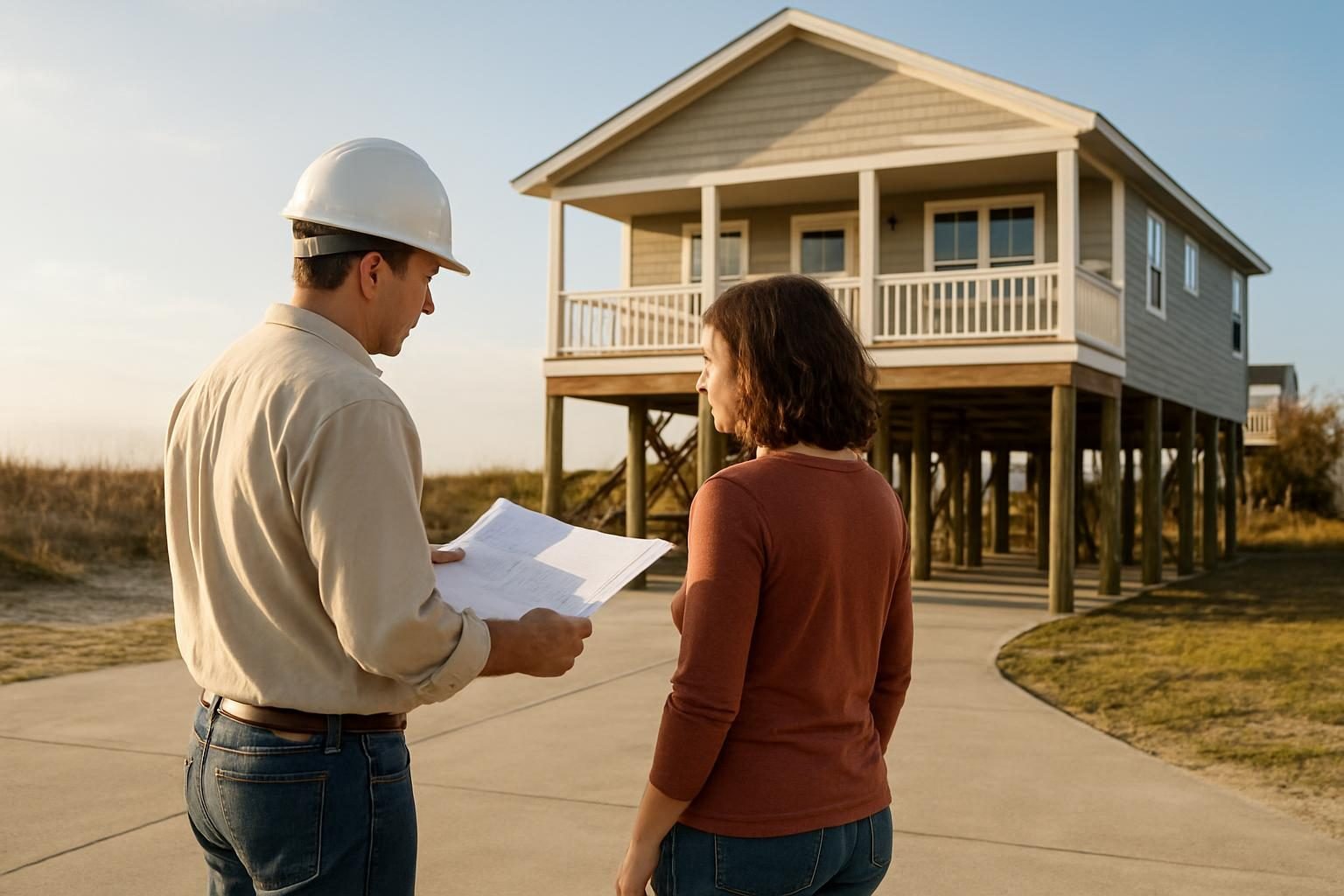
Step 5: Hire a licensed, insured contractor
In North Carolina, general contractors must be licensed by the NC Licensing Board for General Contractors for projects above a certain dollar threshold, and trades such as electrical, plumbing and HVAC carry their own state licensing. Check current thresholds and verify any license directly with the NC Licensing Board for General Contractors rather than taking a business card’s word for it.
Vetting checklist
- License: Verify it is active and matches the business name on the contract.
- Insurance: Ask for proof of liability and workers’ compensation coverage.
- Local track record: Ask for recent Carteret County jobs you can see or references you can call.
- Written estimate: Itemized scope, materials, timeline and payment terms.
- Permits: The contractor should pull them, and permits are generally required for structural, roofing, electrical and plumbing work. Your town or the county inspections office can confirm.
- Coastal experience: Wind-rated fasteners, corrosion-resistant hardware and flood-zone rules are not optional here.
Get at least two or three bids if the situation allows. Reputable local contractors are often booked out after a big storm, so a waiting list is not a warning sign by itself. Rushed, cash-only offers are.
Need help finding someone? You can request storm damage repair help through the form on this page, and we will connect you with a vetted local pro.
The contractor who is still answering your calls after the storm crews leave town is usually the one you want.
Typical storm damage repairs on the Crystal Coast
Coastal storms tend to hit the same parts of a house. Here is what contractors commonly see and how serious each usually is.
| Damage | What it involves | Urgency |
|---|---|---|
| Roof shingles and underlayment | Replacing blown-off shingles, patching or replacing sections; full replacement if widespread | High: leaks follow quickly |
| Siding and trim | Replacing torn vinyl, fiber cement or wood, and re-sealing gaps | Medium |
| Windows and doors | Replacing broken glass, damaged frames and failed seals | High if openings are exposed |
| Water-damaged drywall and insulation | Cutting out wet material, drying, mold prevention, rebuilding | High: mold risk |
| Fallen trees and fences | Tree removal, structural repair, fence and gate replacement | Medium to high |
| Docks, piers and decks | Re-decking, piling repair, rebuilding after surge | Varies; permits may be required near the water |
| Crawl space moisture | Drying, vapor barrier and insulation repair | Medium, but worsens over time |
Roofs are usually the largest expense. Costs vary a lot with size, pitch and materials, so see our breakdown of roof replacement cost in Morehead City and Carteret County for typical ranges. If you are rebuilding anyway, it is worth reading about wind-resistant roofs on the NC coast, since upgrades may also reduce insurance premiums. For beachside work, our upcoming guide to roofing contractors in Emerald Isle will help.
Coastal factors that change the repair
A house on Bogue Banks or Harkers Island faces different rules and risks than one inland in Newport.
- Flood zones and the 50 percent rule: If a home in a flood zone is substantially damaged, local floodplain rules may require it to be rebuilt to current elevation standards. Ask your town or county floodplain administrator early.
- Oceanfront and estuarine permits: Work near dunes, marshes or the water’s edge can involve state coastal permitting. Your contractor should know when this applies.
- Salt corrosion: Use stainless or hot-dipped galvanized fasteners and corrosion-resistant materials. Storm damage is also a good moment to inspect AC units, covered in our guide to salt air and your HVAC.
- Electrical and mechanical systems: Anything that got wet needs a licensed pro before it is re-energized. Watch for our electrician guide for Morehead City.
Many homeowners across the county are retirees or second-home owners who are not on site after a storm. If that is you, ask a neighbor, property manager or local contractor to do an initial check, and give your insurer a local contact. Our Home & Property hub collects more guides on coastal ownership.
A sensible timeline
- First hours: Safety checks, shut off utilities if needed, call your insurer.
- First 48 hours: Photos and video, temporary tarping and board-ups, start drying.
- First week: Adjuster visit, collect two or three contractor bids, verify licenses.
- Weeks 2 to 6 and beyond: Contract signed, permits pulled, repairs scheduled. After a major hurricane, expect delays for materials and labor.
Do not let a payout sit in your account while damage worsens. If you have a mortgage, the lender may be named on insurance checks and release funds in stages, so ask early how that works.
When you are ready, request storm damage repair help from a vetted local pro and we will point you to someone who works in Carteret County. For more local contractors across trades, browse our Local Pros hub.
FAQ
Should I tarp my own roof after a storm?
Only if it is safe, dry and you have experience working at height. Many injuries happen during DIY tarping. A professional temporary repair is often a covered expense, so keep the receipt.
Do I need a licensed contractor in North Carolina?
For larger projects, yes. The state requires a general contractor license above a set project value, and electrical, plumbing and HVAC work require their own licenses. Verify any license with the state board before signing.
Does homeowners insurance cover storm damage?
Standard policies usually cover wind damage, often with a separate hurricane or wind deductible. Flood damage generally requires separate flood insurance. Check your policy and talk to your agent about your specific coverage.
How do I tell a storm chaser from a legitimate local contractor?
Look for a physical local address, a verifiable NC license, proof of insurance and local references. Be cautious of door-knockers, big upfront deposits and anyone offering to waive your deductible.
How long do storm repairs take on the Crystal Coast?
Small repairs may take days, but after a major hurricane, demand for crews and materials can stretch timelines into months. Temporary protection in the meantime keeps the damage from growing.
Get storm damage repair help in Morehead City and Carteret County
Tell us what happened and a vetted local pro will follow up with you about next steps and a quote.