Quick answer: Fishing on the Crystal Coast works year-round, with something biting in every season: spring and fall bring the big runs of drum, bluefish and false albacore, summer favors offshore mahi, tuna and marlin, and winter belongs to speckled trout and striped bass in the sounds. You can fish from a pier, the surf, a kayak, a small skiff in Bogue Sound or Core Sound, or a charter boat out of Morehead City, Beaufort or Atlantic Beach. You will need the right North Carolina license for most saltwater fishing, so check the current rules before you go.
Key takeaways
- Spring and fall are the peak seasons for surf and pier fishing; summer is prime time offshore.
- Inshore fishing in Bogue Sound, Core Sound and around Beaufort Inlet is productive even when the ocean is rough.
- Most recreational saltwater anglers need a license from the NC Division of Marine Fisheries, with some exemptions for piers that hold a blanket license.
- Seasons, size limits and bag limits change, so always confirm with the state before you keep a fish.
Fishing on the Crystal Coast by Season
The Crystal Coast sits where cool northern currents and the warm Gulf Stream both come close to shore. That mix is why the species list is so long. Timing matters more than any other single factor, so start with the calendar.
| Season | What is typically biting | Where to look |
|---|---|---|
| Spring (March-May) | Speckled trout, red drum, flounder moving in, bluefish, Spanish mackerel arriving | Sound shorelines, inlets, piers, surf |
| Summer (June-August) | Mahi, tuna, wahoo, billfish offshore; flounder, Spanish mackerel, spot, croaker inshore | Gulf Stream, nearshore reefs, sounds, piers |
| Fall (September-November) | Red drum, false albacore, king mackerel, mullet run predators, flounder | Surf, inlets, Cape Lookout area, piers |
| Winter (December-February) | Speckled trout, striped bass, black drum, sheepshead, tautog on structure | Creeks, deeper sound holes, bridges, jetties |
These are general patterns, not guarantees. Water temperature, wind and baitfish drive everything, and a warm or cold snap can move a bite by weeks. For a feel of how the seasons shift on the ground, see our guide to Crystal Coast weather by month.
Piers and Surf Fishing
If you do not own a boat, piers and the beach are the easiest way in. Bogue Banks is the main stretch, running from Atlantic Beach through Pine Knoll Shores, Indian Beach, Salter Path and Emerald Isle. It faces south, so wind direction changes the water quickly.
Fishing piers
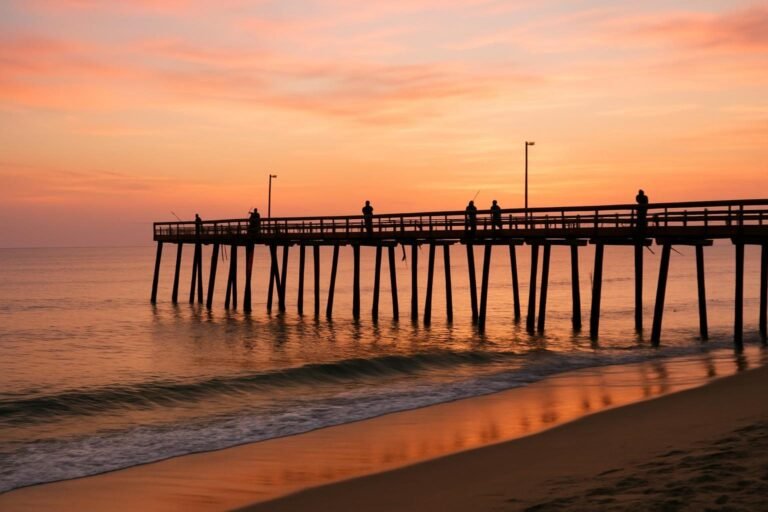
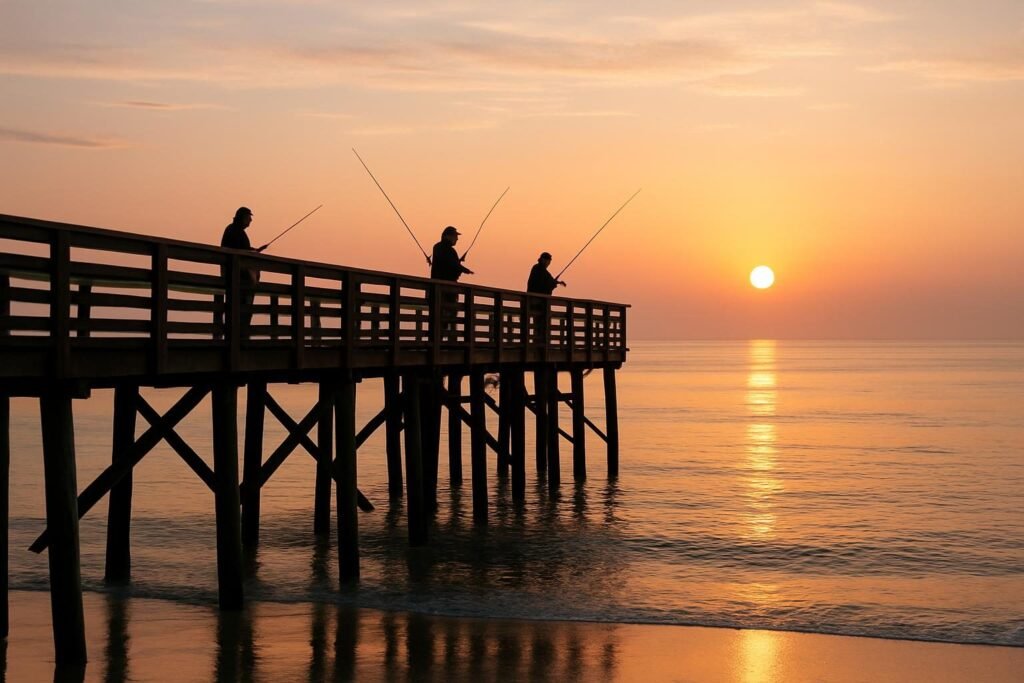
Several long-standing ocean piers operate along Bogue Banks, and they are a good first stop for visitors and newcomers. Most sell day passes, rent rods and tackle, and stock bait. Hours, fees and season dates vary, so call or check each pier before you drive out. For one example in Emerald Isle, see our guide to the Bogue Inlet Fishing Pier.
- Best for beginners: A pier removes the need for a boat and lets you ask the regulars what is biting.
- Best times: Early morning, late afternoon and the hours around a tide change, especially in spring and fall.
- Typical catches: Spot, croaker, pompano, bluefish, Spanish mackerel and, in the right weeks, king mackerel and red drum.
- Downside: Summer weekends are crowded, and parking near the beach fills early.
Surf fishing
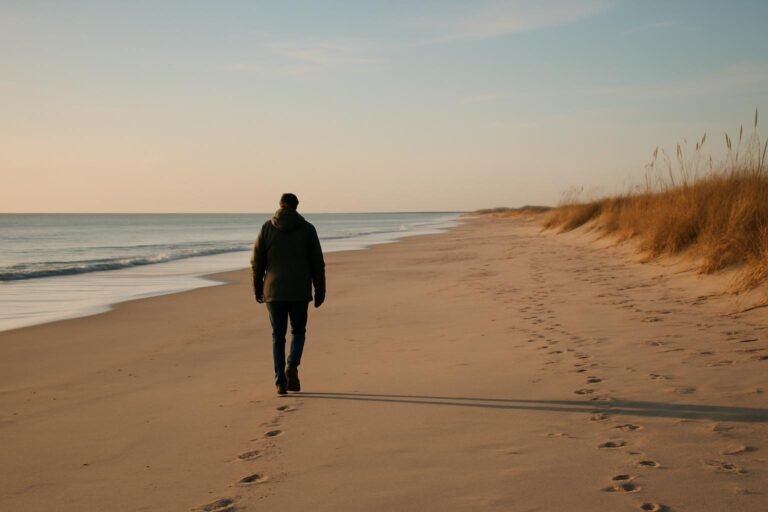
Surf anglers work the cuts, sloughs and points along Bogue Banks, and the more remote beaches of Cape Lookout National Seashore. Look for a darker channel where waves break less, since fish use those lanes to move along the beach. Fall mullet runs are the classic time to target red drum from the sand.
Public beach access varies by town, and some areas have rules about vehicles and gear. Our town-by-town beach guide covers access points, and Fort Macon State Park offers surf and inlet-side fishing with a different feel. Check posted regulations at each location.
Local tip: Fish the first two hours of an incoming tide and the last two of an outgoing one. Moving water pushes bait around, and predators follow it.

Inshore Fishing in Bogue Sound and Core Sound
For a lot of locals, the sounds are the heart of fishing here. The water is protected from ocean swell, the marshes hold bait, and a small boat or kayak is enough to get started. Bogue Sound runs along the back of Bogue Banks, while Core Sound stretches east and north past Harkers Island, Marshallberg and the Down East communities.
What to target
- Flounder: Work channel edges, docks and inlet shorelines with live or artificial bait, typically from spring through fall.
- Red drum (puppy drum): Shallow marsh edges and oyster flats, often visible by a pushing wake.
- Speckled trout: Creeks and deeper holes in cooler months, on soft plastics and live shrimp.
- Sheepshead and black drum: Bridge pilings, docks and oyster structure, usually in the cool season.
Getting on the water
Public boat ramps serve Morehead City, Beaufort, Cedar Point, Harkers Island and other spots around the county. Ramps can be busy on summer weekends, and shallow sound water has sandbars that catch unfamiliar boaters, so carry a chart or navigation app and watch the tide. If you would rather paddle, our upcoming kayaking guide for the Crystal Coast will cover launch spots and safety.
Down East has a quieter, working-waterfront character, and many anglers there fish the same way their families have for generations. Our planned guide to Down East Carteret County will cover that area in more detail.
When the ocean is too rough to fish, the sounds are usually still fishable.
Offshore Charters and the Gulf Stream
Offshore is where the Crystal Coast earns its sportfishing reputation. The Gulf Stream runs relatively close to the coast here, which puts blue water and big pelagics within day-trip range. The Big Rock Blue Marlin Tournament in Morehead City is the best-known expression of that, and you can read more in our local guide to the tournament.

Types of trips
- Inshore and nearshore charters: Shorter trips for flounder, drum, king mackerel and bottom species. Good for families and first-timers.
- Bottom fishing: Reefs and ledges for grouper, snapper, sea bass and other bottom dwellers, subject to seasonal rules.
- Gulf Stream trips: Longer runs for mahi, tuna, wahoo and billfish. These involve early starts and a full day.
- Head boats: Larger boats that sell individual spots, a budget-friendly way to try bottom fishing.
Choosing a charter
Charter boats leave from the Morehead City waterfront, Beaufort, Atlantic Beach and other marinas. Rates vary widely by boat size, trip length and season, so ask for a clear quote and what it includes before you book.
- Confirm the captain holds the required licenses and insurance, and ask whether your fishing licenses are covered by the boat.
- Ask what is included: bait, tackle, ice, cleaning and fish processing.
- Clarify the cancellation policy for weather, which is common on the coast.
- Be honest about your experience and seasickness history so the captain can match the trip.
Local tip: Take motion-sickness medicine the night before, not after you are already queasy. A calm sound can feel very different from the open Gulf Stream.
Licenses and Rules: NC Coastal Fishing Basics
North Carolina regulates saltwater fishing through the Division of Marine Fisheries, part of the NC Department of Environmental Quality. In general, a Coastal Recreational Fishing License is required for recreational saltwater fishing in coastal waters, with exceptions for some groups and for licensed piers and charter boats. Rules change, so confirm the current requirements, fees and exemptions with the state before you fish.
- License types: Short-term and annual options are available, and some licenses differ for residents and non-residents.
- Size and bag limits: Species like flounder, red drum, speckled trout and striped bass have specific limits that change by season and area.
- Closed seasons and areas: Some species have closed seasons, and some waters have special rules.
- Where to check: The Division of Marine Fisheries website and its proclamations are the authoritative source.
Fishing inside national or state park boundaries can add its own rules. For Cape Lookout, check with the National Park Service and see our guide on visiting Cape Lookout from Carteret County.
Practical Tips From the Dock
A few habits separate frustrating days from good ones, and most are not about gear.
- Watch the weather and tides: Wind against tide can make an inlet dangerous. Small craft advisories are real.
- Respect hurricane season: From late summer into fall, storms reshape plans. Our notes on hurricane season in Carteret County cover what that means locally.
- Rinse your gear: Salt eats reels, hooks and truck frames. Rinse everything with fresh water after each trip.
- Handle fish responsibly: Wet your hands before releasing, and know the measure for your target species.
- Dress for the water: It is often cooler and windier out there than on shore, and sun reflects off the water.
After the Catch: Eating Local
Part of the appeal here is eating what comes out of the water. Keep your fish cold, clean it promptly and follow current size and bag limits. If you did not catch anything, local fish houses and markets are close by. Our seafood guide and month-by-month seafood calendar show what is fresh when.
For more ways to spend time outdoors, browse our Beaches & Outdoors section.
FAQ
Do I need a license to fish from a pier on the Crystal Coast?
Often you do not need your own license on a pier that holds a blanket license, but this depends on the specific pier. Ask when you buy your pass, and confirm current rules with the NC Division of Marine Fisheries.
What is the best month for fishing on the Crystal Coast?
It depends on what you want. April-May and October-November are strong for surf and pier fishing, summer is best offshore, and winter is good for speckled trout in the sounds.
Can I fish without a boat?
Yes. Ocean piers, surf beaches, bridges and shoreline access in the sounds give you plenty of options. Rental rods and bait are available at many piers and tackle shops.
How do I find a fishing charter?
Charters operate from marinas in Morehead City, Beaufort and Atlantic Beach, among others. Compare trip types, ask what is included, confirm licensing and insurance, and ask about weather cancellations.
Are there fishing seasons and size limits I should know about?
Yes. Many species have size limits, bag limits and closed seasons that change. Check the NC Division of Marine Fisheries before you keep any fish.