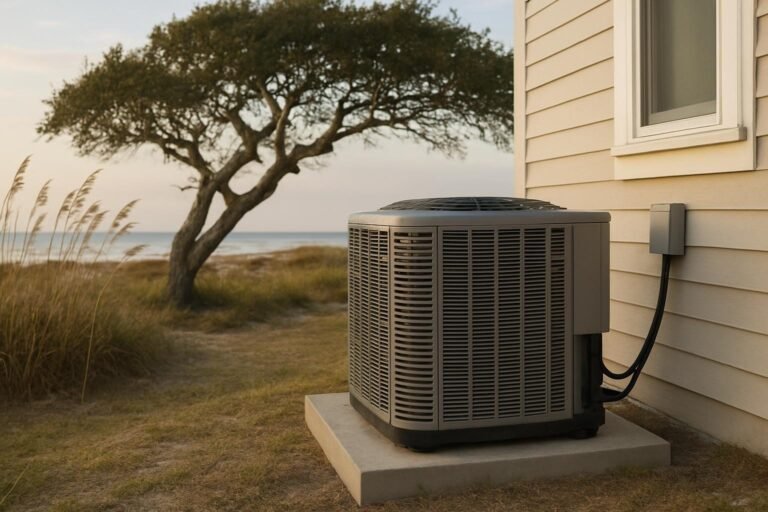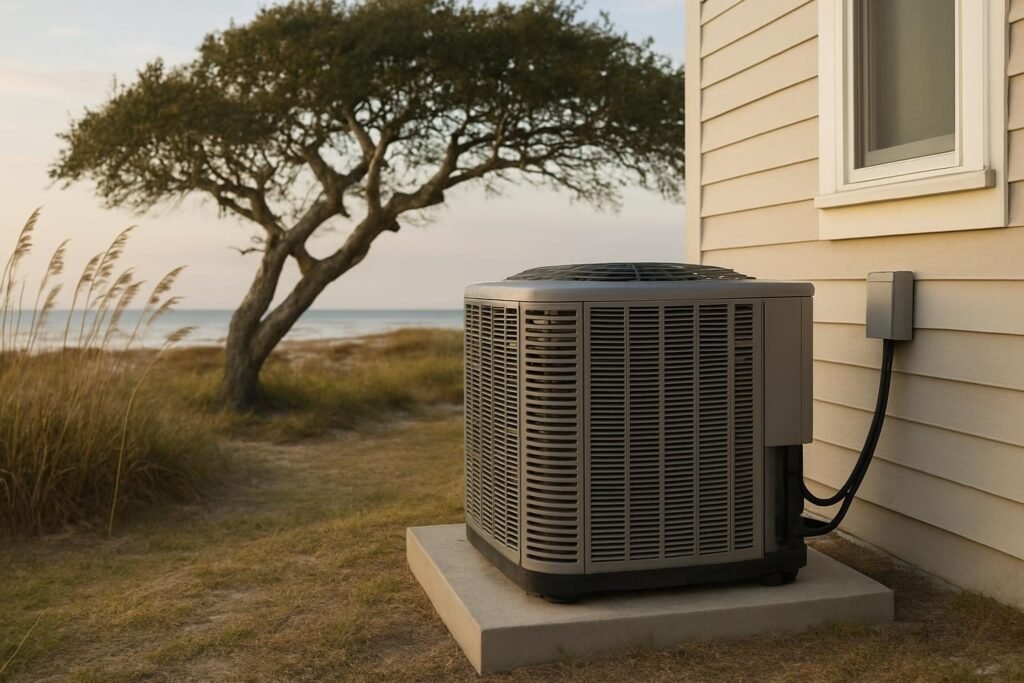
Quick answer: For most Crystal Coast homes, a heat pump is the better everyday choice. Our winters are mild and damp, which is where heat pumps run efficiently, while a furnace earns its keep during the few nights each year the temperature drops into the teens or low 20s. If your system is under 10 years old and the repair is modest, fix it; if it is 12 to 15 years old and corroded, replacing it usually makes more sense.
Key takeaways
- Heat pumps handle most Carteret County winter days efficiently and also cool the house in summer.
- Furnaces (gas or propane) still win on the coldest nights, but gas lines are not available everywhere in the county.
- Salt air shortens the life of outdoor coils, so a heat pump’s outdoor unit needs more care here than inland.
- Get at least two written estimates, and confirm license, insurance and load calculation before you sign.
If your heat quit on the first cold morning of the season, you can request help with HVAC repair from a vetted local pro using the form on this page. The rest of this guide helps you decide what to fix, what to replace and whom to trust.
How Winter Really Behaves on the Crystal Coast
Our winters are short and mostly gentle. Days in Morehead City, Beaufort and Emerald Isle often sit in the 50s, with damp air that makes 40 degrees feel colder than the thermometer says. The occasional cold snap pushes overnight lows near or below freezing, and the sound and ocean keep temperatures from swinging as hard as they do inland. For a month-by-month picture, see our Crystal Coast weather by month guide.
That climate matters because heat pump efficiency depends on outdoor temperature. Here is how it plays out:
- Mild days (40s and up): a heat pump moves heat very efficiently and costs less to run than most furnaces.
- Cold snaps (20s and below): a heat pump works harder and may lean on electric backup heat strips, which are expensive to run.
- Damp weather: moisture does not hurt performance, but the outdoor unit can ice up and must run defrost cycles.
Heat Pump vs Furnace: Side-by-Side
| Factor | Heat Pump | Furnace (gas/propane) |
|---|---|---|
| Mild winter days | Very efficient | Works fine, higher operating cost |
| Hard freezes | Slower, may use backup strips | Strong, steady output |
| Summer cooling | Same unit cools the house | Needs a separate AC |
| Fuel source | Electricity only | Natural gas or propane |
| Salt-air exposure | Outdoor coil is exposed year-round | Furnace sits indoors, but the AC coil still faces the weather |
| Typical lifespan | About 12 to 15 years on the coast | About 15 to 20 years |
Many local homes have a hybrid setup: a heat pump for the bulk of the season and electric or gas backup for the cold nights. Dual-fuel systems that switch to a furnace below a set temperature exist, though they cost more up front.
Salt Air, Humidity and Your Equipment
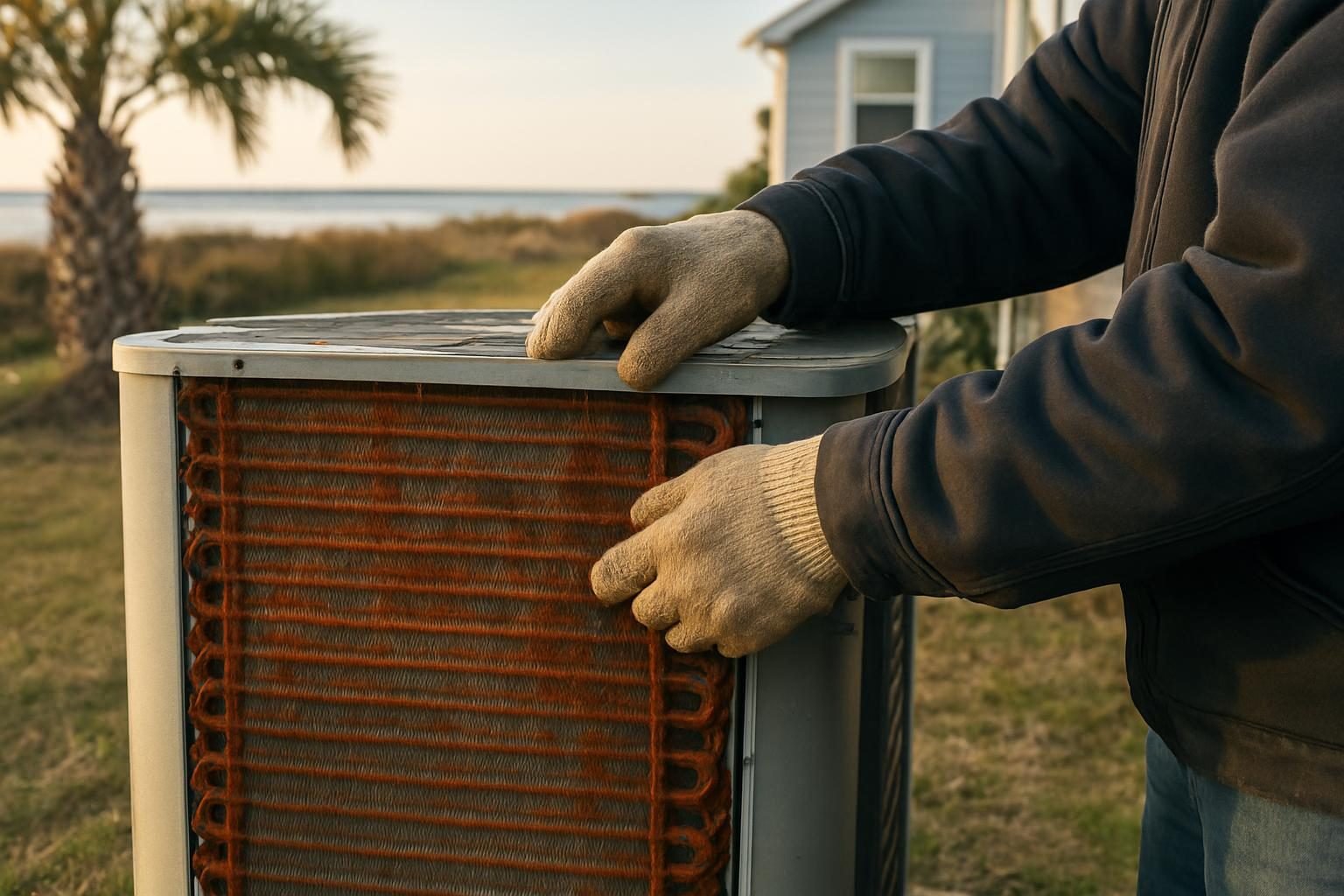
The biggest coastal wrinkle is corrosion. A heat pump’s outdoor unit runs in all seasons, so its aluminum coil and fasteners face salt-laden air year-round. Homes on Bogue Banks, Harkers Island, Atlantic and anywhere with open water exposure see the fastest wear. Our guide to salt air and your HVAC covers protection in detail.
A few practical habits help either system last:
- Rinse the outdoor coil gently with fresh water a few times a year (power off first, low pressure only).
- Ask about coastal or coated coils when shopping for a new unit.
- Keep shrubs and debris at least a couple of feet clear of the outdoor unit.
- Schedule a fall tune-up before the first cold snap, not after.
On the coast, the outdoor coil is usually the first thing to fail and the last thing homeowners think to check.
Common Cold-Snap Failures
HVAC companies in the county get their busiest calls when the first hard freeze hits. These are the problems that show up most often:
- Iced-over outdoor unit. Some frost is normal during defrost, but a solid block of ice points to a failed defrost control, low refrigerant or a blocked coil.
- Blowing cool air. A heat pump in backup mode or a thermostat set to the wrong mode can feel like a failure when it is not.
- Failed heat strips or igniter. Electric backup elements and furnace igniters wear out from sitting unused most of the year.
- Tripped breakers. Heat strips draw a lot of power, and old panels sometimes struggle. See our guide to electricians in Morehead City if breakers keep tripping.
- Frozen condensate or pipes. Drain lines in unheated spaces can freeze on the coldest nights.
Local tip: Test your heat in October, not December. Run it for 15 to 20 minutes on a mild evening, and if something is wrong you will book a repair before every other household is calling.
Repair or Replace: How to Decide

The old rule of thumb still works: if the repair costs more than about half the price of a new system, and the unit is past two-thirds of its expected life, replace it. Age, repair history and refrigerant type all factor in. Older systems that use phased-out refrigerant can become expensive to service.
Use this as a quick screen:
- Repair if: the system is under 10 years old, the failure is a single part (capacitor, igniter, thermostat) and it has run well before.
- Lean toward replacement if: the unit is 12 or more years old, the coil is visibly corroded, repairs are recurring, or energy bills keep climbing.
- Ask about ductwork: leaky or wet ducts waste energy no matter which system you pick. Moisture under the house can also be a root cause, so read our piece on crawl space moisture on the coast.
For a deeper look at service calls, see HVAC repair in Morehead City: costs, common problems and hiring tips.
Typical Cost Ranges
Prices vary with home size, ductwork condition, brand and the season you call. The figures below are rough estimates for the region, not quotes, so get written estimates for your own home.
| Job | Typical range (estimate) |
|---|---|
| Diagnostic or service call | $75 to $200 |
| Minor repair (capacitor, igniter, thermostat) | $150 to $600 |
| Major repair (blower motor, heat strips, refrigerant leak) | $600 to $2,500 |
| Heat pump replacement | $6,000 to $13,000 |
| Gas or propane furnace replacement | $3,500 to $8,000 |
| Annual maintenance visit | $100 to $250 |
Federal and utility incentives for heat pumps have changed in recent years, so check current programs with your utility and the U.S. Department of Energy before you buy.
A cheap quote that skips the load calculation often becomes an expensive system that never heats the house evenly.
How to Vet an HVAC Contractor
A good contractor is worth more than a good brand. Before anyone touches your equipment, work through this checklist:
- Verify the license. North Carolina requires HVAC work to be done under a licensed contractor. Check the license through the NC State Board of Examiners of Plumbing, Heating and Fire Sprinkler Contractors.
- Ask for proof of insurance. Liability and workers’ compensation both matter.
- Get written estimates. Two or three, with the equipment model, warranty terms and scope spelled out.
- Expect a load calculation. For a replacement, the installer should size the system to your home, not just match the old one.
- Ask about coastal experience. Coated coils, mounting height for flood zones and hurricane strapping all matter here.
- Read the warranty. Know who covers parts and who covers labor, and for how long.
Flood-prone homes should raise the outdoor unit on a stand above the expected water line. Ask about this if you are in a flood zone, and see our guides to storm damage repair and whole-house generators for planning around outages. For insurance questions, watch for our upcoming guide on homeowners insurance on the North Carolina coast.
Which One Should You Choose?
Match the system to how you live:
- Full-time residents with electric service only: a modern heat pump, sized correctly, with backup strips for cold nights.
- Homes with existing gas or propane: keep the furnace if it is healthy, or consider a dual-fuel setup.
- Second homes and rentals: a heat pump with a smart thermostat keeps pipes safe and costs less when the house sits empty. Our retiring on the Crystal Coast guide covers more on full-time and seasonal ownership.
For more on keeping your house in shape, browse the Home & Property hub and the Local Pros hub. If your system is struggling now, request HVAC repair from a vetted local pro using the form on this page.
FAQ
Do heat pumps work in coastal North Carolina winters?
Yes. Our winters are mild enough that a properly sized heat pump handles most days efficiently. On the coldest nights it may switch to backup heat, which costs more to run.
Is a furnace cheaper to run than a heat pump here?
Usually not on mild days, since a heat pump moves heat rather than making it. A gas or propane furnace can be cheaper during extended hard freezes, depending on current fuel and electric rates.
How long do HVAC systems last near the ocean?
Expect roughly 12 to 15 years for a heat pump or AC with an exposed outdoor coil, and longer for an indoor furnace. Regular rinsing and maintenance can add years.
When should I replace instead of repair?
Consider replacing when the unit is 12 or more years old, the repair costs about half of a new system, or the coil is visibly corroded. Newer units with simple failures are usually worth repairing.
How do I check an HVAC contractor’s license?
Look up the contractor through the NC State Board of Examiners of Plumbing, Heating and Fire Sprinkler Contractors, and ask for proof of insurance before work begins.
Request HVAC repair in Morehead City and Carteret County
Tell us what your heat is doing and a vetted local HVAC pro will follow up to schedule a visit.