Quick answer: Hurricane season in Carteret County runs June 1 through November 30, with the real risk concentrated from August through October. The most useful things you can do are learn your evacuation zone before a storm is named, plan around the bridge and road closures that cut off Bogue Banks and Down East, and keep your insurance records and supplies ready by early summer.
Key takeaways
- The season is June 1 to November 30, but August through October is when most serious threats arrive.
- Know your evacuation zone now, using ReadyNC and Carteret County Emergency Management, not during a storm.
- Bogue Banks, Harkers Island and Down East can be cut off by water over roads and bridges, so leave early.
- Photograph your home and belongings before the season and store copies off-site.
- After a storm, document damage before you clean up or repair anything.
When Hurricane Season Starts and When It Matters Most
The Atlantic season officially runs June 1 through November 30. Early-season storms do happen on the Crystal Coast, but they tend to be weaker and shorter-lived. The peak runs from mid-August through early October, and September is the month locals watch hardest.
Our location matters. Carteret County juts out into the Atlantic near Cape Lookout, so storms tracking up the coast often pass close, and storms in the Gulf Stream curve toward us. For a month-by-month feel of the climate beyond storm risk, see our guide to Crystal Coast weather by month.
- June and July: Lower risk, but a good window to prepare while stores are stocked and prices are normal.
- August and September: Peak risk. Have your plan, supplies and documents ready.
- October and November: Risk tapers but does not vanish. Late-season storms can still bring serious flooding.
Know Your Evacuation Zone
Evacuation orders are issued by zone, so you need to know yours before anyone asks you to leave. Zones are based mostly on storm surge and flooding risk, not just wind. A home a few blocks from the water can be in a different zone than one on the sound, and where you live in the county changes the picture a great deal.
Look up your address through ReadyNC, the state’s emergency preparedness resource, and check Carteret County Emergency Management for current local zone information and alerts. Confirm details with those official sources each season, since maps and procedures get updated.
What to expect by area
| Area | Main concern | What it means for you |
|---|---|---|
| Bogue Banks (Atlantic Beach, Pine Knoll Shores, Indian Beach, Salter Path, Emerald Isle) | Surge, overwash, limited bridge access | Leave early when ordered. Access can be restricted after a storm. |
| Beaufort and Morehead City waterfronts | Surge up the rivers and sound | Low-lying streets near the water flood first. |
| Harkers Island, Marshallberg, Down East | Flooding that cuts road access, surge from Core Sound | Roads can go under water. Plan to leave well ahead of the storm. |
| Newport, Cape Carteret, Cedar Point, Peletier | Wind, tree fall, inland flooding along creeks | Lower surge risk in many spots, but power and road outages are common. |
Living near the sound or a creek still carries flood risk even if you are not on the ocean. If you are weighing a move, our comparison of every town touches on how location shapes everyday trade-offs.
Bridges, Roads and Getting Out
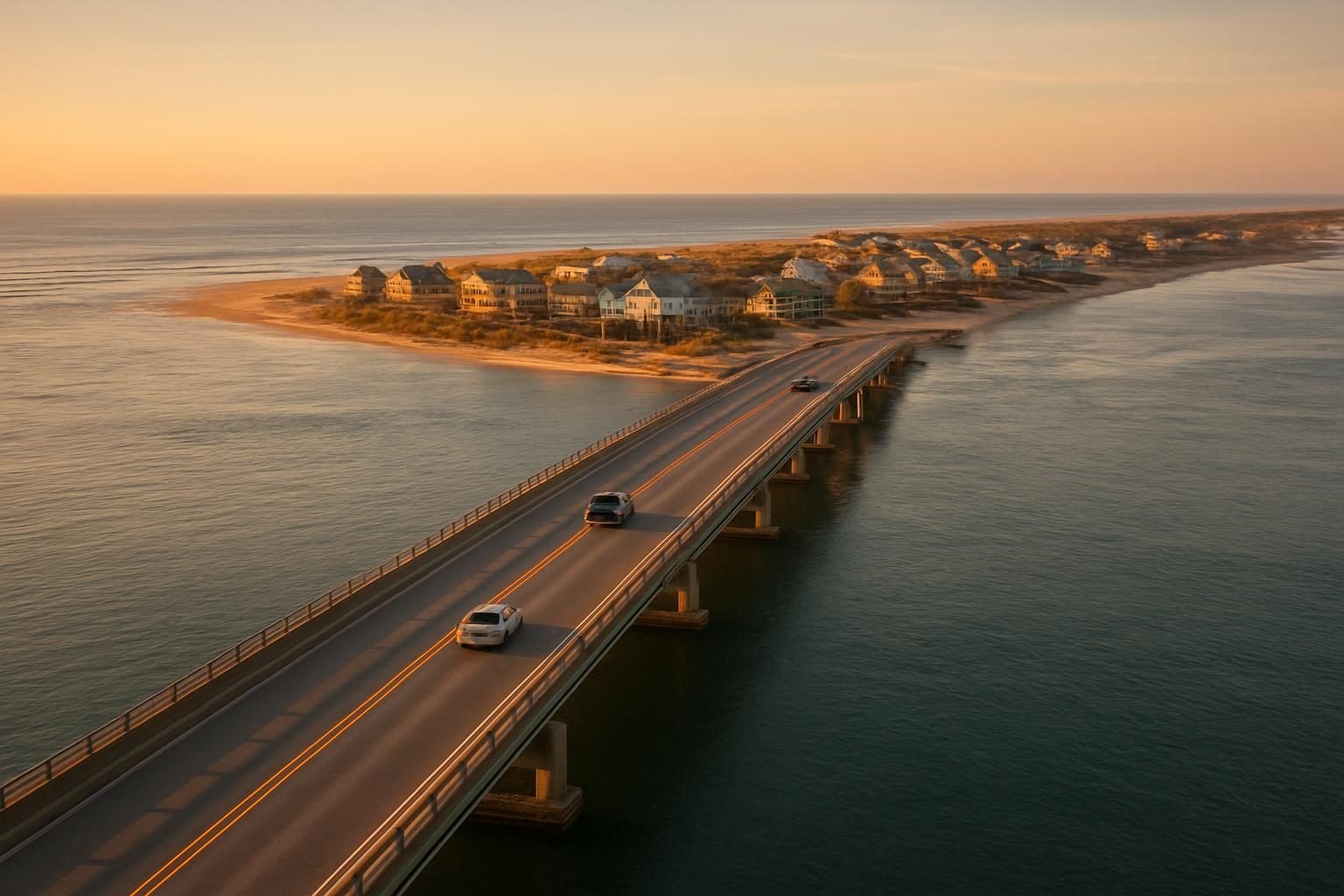
Geography drives the biggest practical problem here: you leave by a small number of routes. US-70 runs through Newport, Morehead City and Beaufort and then Down East. NC-24 carries traffic through Cape Carteret and Cedar Point. NC-58 serves Bogue Banks, and the bridges between the island and the mainland are the choke points.
Bridges can close to traffic when winds reach sustained thresholds, and flooding can close low sections of road long before a storm arrives. Once a bridge closes, no one is crossing it, no matter how much you need to. After a storm, damage inspections can delay reopening.
- Leave early. If a mandatory evacuation is issued for your zone, go when you are told, not when the weather turns.
- Expect heavy traffic. Evacuating drivers from the whole region share the same few routes.
- Have a destination. Know where you are going and a second option in case the first is affected.
- Check road conditions. Use NCDOT and county announcements for current closures rather than social media rumors.
The bridges are the bottleneck: once winds close them, nobody crosses, no matter how much they need to.
Supplies to Have Before the Season
Buy supplies in early summer, not when a storm is on the forecast. Shelves empty fast once a cone points at the coast. For a room-by-room walk-through of the house itself, use our hurricane prep checklist for Carteret County homes.
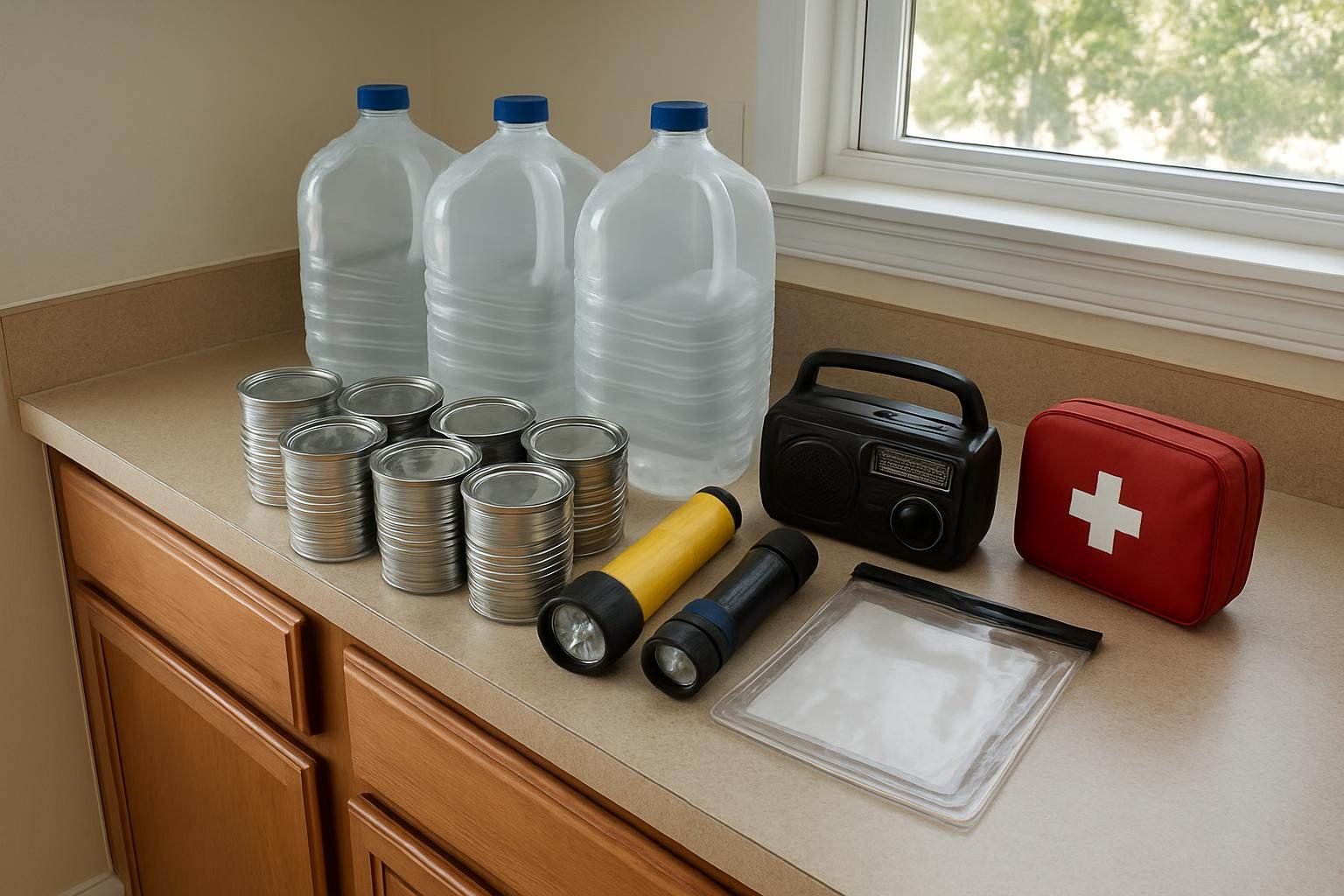
- Water and food: A common recommendation is at least a gallon per person per day for several days, plus non-perishable food that needs no cooking.
- Medications and medical needs: A reserve of prescriptions, plus anything needed for pets.
- Light and power: Flashlights, extra batteries, and charged power banks. A battery or hand-crank radio for alerts.
- Cash: Card readers fail when power and networks go down.
- Fuel: Fill your vehicle early. Gas stations can run out or lose power.
- Documents: IDs, insurance policies, and property records in a waterproof container or digital copy.
- Basic tools and cleanup items: Tarps, work gloves, trash bags, and a first-aid kit.
Local tip: If you rely on a generator, test it in early summer and store fuel safely. Never run one in a garage or near a window. If you are considering a permanent setup, see our planned guide on whole house generators in Carteret County.
Military and newcomer households
If you are new to the area, especially with a job at MCAS Cherry Point or Camp Lejeune, ask your command or installation about its own storm procedures, which can run alongside county guidance. Our moving guide covers the broader transition.
During the Storm
If you stay, you are on your own for longer than you expect. Emergency services stop responding when conditions become dangerous, so a call for help may not be answered until winds subside.
- Stay inside, away from windows, in an interior room on the lowest safe level above flood water.
- Do not drive through standing water. Depth and road damage are hard to judge.
- Do not go outside during the eye. The back side of the storm follows.
- Keep devices charged and conserve battery.
Storm surge is the leading threat to life on the coast, and it often arrives with the first wave of rising water, not the strongest wind. If your zone is under an evacuation order, treat it as non-negotiable.
Surge, not wind, is what most threatens life on the coast, and it can arrive before the worst weather does.
After the Storm: First Steps
Re-entry is not instant. Officials may restrict access to Bogue Banks and other areas while crews clear debris, inspect bridges and restore utilities. Wait for official word before returning.
- Check safety first. Watch for downed power lines, gas smells, weakened trees and flooded roads.
- Document before you clean. Take photos and video of every area of damage and affected belongings before moving anything.
- Protect the property. Cover broken windows or roof openings with tarps to prevent further damage, and keep receipts.
- Contact your insurer. Report the claim promptly and ask what temporary repairs are covered.
- Watch for contractor scams. Be cautious of door-to-door offers and large upfront payments. Verify licenses and get written estimates.
- Dry things out. Mold can start quickly in our humidity, so ventilate and remove soaked material.
Roof and water damage are the most common problems. Our roof replacement cost guide gives typical ranges, and we are preparing a guide to storm damage repair on the Crystal Coast. After flooding, crawl spaces need attention too; see crawl space moisture on the coast.
Insurance and Documentation
The time to sort out coverage is well before a storm. Standard homeowners policies typically do not cover flood damage, and many coastal policies carry a separate wind or hurricane deductible, often a percentage of the home’s insured value rather than a flat amount. Read yours so you know what you would pay out of pocket.
Flood coverage is a separate policy, and new policies commonly carry a waiting period before they take effect, so you cannot buy it when a storm is already approaching. We are preparing a guide on flood insurance in Carteret County. For the wider cost picture, see cost of living in Carteret County. Some roof upgrades may affect premiums; our upcoming piece on wind mitigation for roofs in NC will cover that.
Build your records now
| Record | How to keep it |
|---|---|
| Home walk-through video | Film every room, closets and cabinets open, plus the exterior, roof and outbuildings. |
| Inventory of valuables | List items with approximate purchase dates and values. Keep serial numbers for electronics. |
| Policy documents | Store copies of declarations pages for home, flood, auto and any boat or umbrella policy. |
| Contacts and claim numbers | Keep your agent’s and insurer’s contact details in your phone and on paper. |
| Off-site backup | Save everything to cloud storage or send to a relative outside the area. |
After a loss, keep a log of every call, adjuster visit and receipt. Check your policy and speak with your agent about how and when to file.
Part of Life Here, Not a Reason to Panic
Most seasons pass with little more than a few scares and some rain. Locals take storms seriously without letting them run the calendar; the Big Rock Blue Marlin Tournament and the NC Seafood Festival happen in the shadow of the same season. If you want to see how the rhythm fits with the rest of the year, browse our events and seasons hub.
The honest trade-off: living on the coast means accepting a few weeks each fall of watching forecasts, and insurance costs that reflect that risk. A plan made in June makes the rest easy.
FAQ
When is hurricane season in Carteret County?
The Atlantic hurricane season runs June 1 through November 30. The highest risk for the Crystal Coast is typically from mid-August through early October.
How do I find my evacuation zone?
Use the ReadyNC tools and check with Carteret County Emergency Management for the current zone map and alerts. Look it up before the season starts and confirm each year.
Can I get back to Bogue Banks after a storm?
Not always right away. Authorities may restrict access while bridges are inspected and debris and utilities are handled. Follow official announcements before attempting to return.
Does homeowners insurance cover flood damage?
Standard homeowners policies generally do not cover flood damage, which usually requires a separate flood policy. Many have a waiting period, so buy early and ask your agent for specifics.
What should I do first after storm damage?
Make sure the area is safe, then photograph and video all damage before cleaning up. Make temporary repairs to prevent further loss, keep receipts, and contact your insurer promptly.