Quick answer: Tree removal in Morehead City typically runs from a few hundred dollars for a small tree to several thousand for a large pine or live oak near a house, power lines or a dock. Costs jump after storms, so the cheapest move is usually to deal with weak, leaning or dead trees before hurricane season. Insurance generally pays for fallen trees only when they hit a covered structure, so know your policy before you need it.
Key takeaways
- Tree removal near Morehead City is priced by height, access, condition and what is underneath the tree, not just by species.
- Pines fail by snapping or toppling in saturated sand; live oaks usually hold if they are properly pruned and healthy.
- Trimming is the right call for a sound tree. Removal makes sense for dead, leaning, diseased or root-damaged trees.
- Homeowners policies usually cover tree removal only when a tree damages a covered structure or blocks access, and limits are often low.
- Book work in the off-season. After a named storm, every crew in the county is booked and prices rise.
Trees are part of why people love living here, and also one of the bigger storm risks on a lot. If you have a tall loblolly pine leaning over a roof in Morehead City or a big live oak shading a yard in Beaufort, this guide covers what removal costs, when trimming is enough and how to handle insurance. Want a number for your own yard? Request help with tree removal from a vetted local pro using the form on this page.
What Tree Removal Costs in Morehead City
Prices below are typical ranges for coastal North Carolina and are estimates only. Your actual quote depends on the specific tree and site, so get at least two written quotes.
| Job | Typical range | What drives the price |
|---|---|---|
| Small tree (under about 30 ft) | $200 to $800 | Easy access, no obstacles |
| Medium tree (30 to 60 ft) | $600 to $1,800 | Height, lean, yard access |
| Large pine or oak (60 ft+) | $1,500 to $4,000+ | Crane or climbing, nearby structures |
| Tree over a roof, dock or power line | $2,000 to $6,000+ | Rigging, risk, coordination with utility |
| Stump grinding | $100 to $500 per stump | Diameter, roots, access |
| Emergency or storm-damage removal | Often 1.5x to 2x normal rates | Demand, hazard, after-hours work |
What pushes a quote up
- Tight access. Older Morehead City lots with fences, alleys or narrow side yards mean more hand work and less equipment.
- Targets underneath. A tree dropping straight down into open grass is cheap. A tree hanging over a roof, pool, screened porch or boat lift is not.
- Decay. Dead or rotten wood is unpredictable, so crews price in extra caution.
- Debris haul-off. Some quotes include chipping and hauling; others charge extra. Ask.
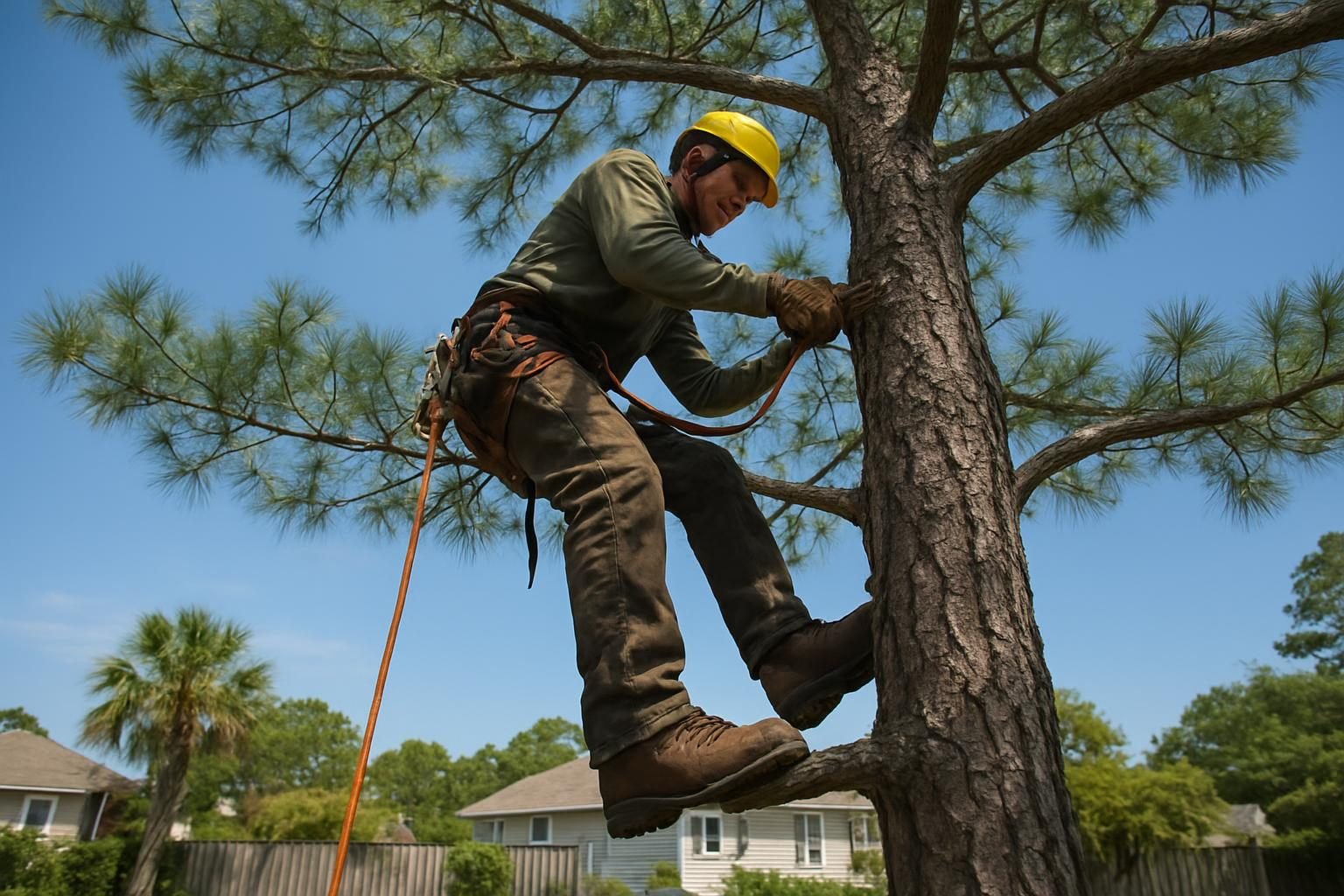
Pines vs. Live Oaks in a Hurricane
The two trees you will see most around Carteret County behave very differently in wind. Understanding that helps you decide what to keep.
Loblolly and other pines
Pines are tall, shallow-rooted and top-heavy. In wet sandy soil after a long rain, they tend to topple root and all, or snap partway up the trunk. Stands that grew up together in a thick group can be more vulnerable once a neighbor tree falls and opens a gap to the wind.
Warning signs on a pine include a new lean, soil heaving at the base, dead branches high up, resin weeping from the trunk and browning needles out of season.
Live oaks
Live oaks are wide, dense and deep-rooted, and a healthy one is a survivor. They are not invincible. Heavy limbs can split, and trees with rot, past construction damage or compacted roots can fail. Because they hold so much canopy, they catch a lot of wind.
- Best protection: regular pruning by a qualified arborist to thin the canopy and remove weak limbs, not heavy topping.
- Red flags: hollow trunks, mushrooms at the base, cracks in major limbs and dead wood in the crown.
A pine in soaked sand fails differently than a live oak, and your pruning plan should reflect that.
Trimming vs. Removal: How to Decide
Not every worrying tree needs to come down. A sound tree with a few bad limbs is a trimming job. A compromised tree is a removal job.
| Situation | Usually best |
|---|---|
| Healthy tree, dead or crossing limbs | Trim |
| Live oak with heavy, overextended limbs over the house | Trim and thin |
| Tree leaning more than it used to, soil lifting | Remove |
| Dead tree or large dead sections | Remove |
| Trunk rot, hollow core or major cracks | Remove |
| Pine too close to roof or power lines | Remove, or trim if sound |
Be wary of anyone who wants to “top” a tree by chopping off the crown. It weakens the tree and the regrowth is poorly attached, which makes storm failure more likely.
Permits, Utilities and Where You Live
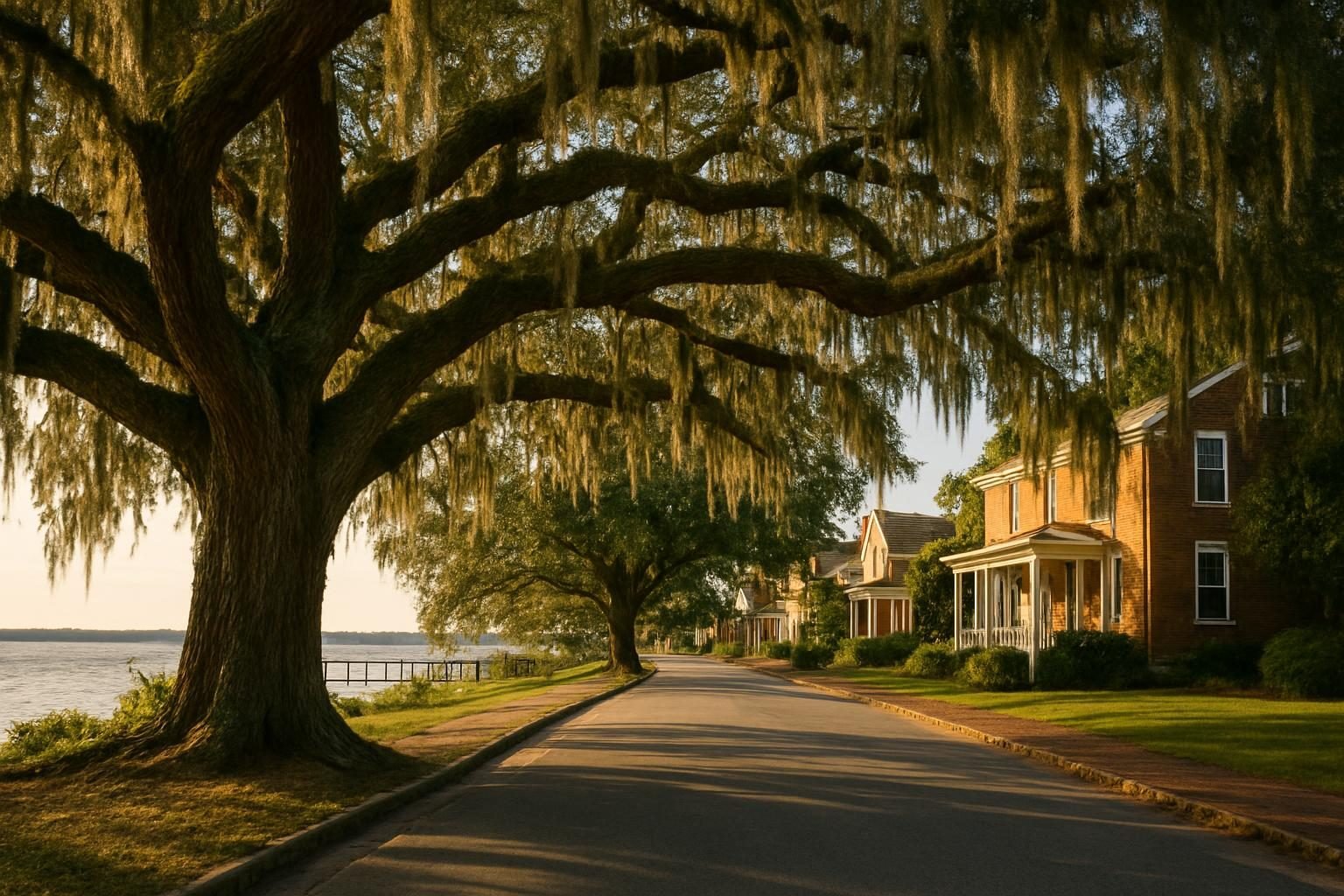
Rules vary by town. Morehead City, Beaufort, Pine Knoll Shores and Emerald Isle each have their own ordinances, and some protect large or significant trees or require a permit before removal. Pine Knoll Shores in particular is known for its maritime forest, so check with the town before cutting anything sizable.
- Call your town or the county planning office before removing a large tree, especially in a historic district or protected area.
- If a tree is touching or near power lines, do not touch it. Contact the utility, as crews cannot safely work near energized lines without coordination.
- Ask whether your HOA requires approval or replanting.
Local tip: Schedule removals and heavy pruning from late fall through early spring. Crews are less booked, the ground is firmer and you are not racing a forecast cone.
Preparing Trees Before Hurricane Season
The best storm prep for trees happens months before anything forms in the Atlantic. Once a storm is a few days out, you will not find a crew.
- Walk your lot each spring. Look up and look at the base of each large tree.
- Mark problem trees. Anything leaning, dead or hanging over your roof, car or dock goes on the list.
- Get an assessment. A certified arborist can tell you which trees are worth saving.
- Prune before June. Thin canopies shed wind better.
- Clear gutters and yard debris. Loose limbs and branch piles become projectiles.
For the broader list, see our hurricane prep checklist for Carteret County homes.
Once a storm is a few days out, you will not find a crew at any price.
Insurance After a Tree Falls
Policies differ, so read yours and call your agent, but these are the general patterns.
- Tree hits a covered structure: Homeowners insurance typically covers the damage and often some removal cost, subject to your deductible and a per-tree or total cap that is often a few hundred to a few thousand dollars.
- Tree falls but hits nothing: Removal is usually your expense.
- Tree blocks a driveway or entrance: Some policies cover removal to restore access.
- Dead or neglected tree: Insurers can push back if a tree was obviously diseased or dead before it fell.
- Wind vs. flood: Wind damage and flood damage are handled by different policies, and coastal homes often carry separate wind or hurricane deductibles, commonly a percentage of the insured value.
Photograph everything before cleanup, keep receipts and avoid signing contracts that assign your insurance claim to a contractor you just met. For the repair side, our guide to storm damage repair on the Crystal Coast walks through the steps, and if a tree damaged your roof, see roof replacement cost in Morehead City and Carteret County. The NC Department of Insurance publishes consumer guidance on storm claims at ncdoi.gov.
Hiring a Tree Service Without Getting Burned
After every storm, out-of-area crews and door-knockers appear. Some are fine; some take a deposit and disappear.
- Ask for proof of liability insurance and workers’ comp. If an uninsured worker is hurt on your property, you can be on the hook.
- Get written, itemized quotes covering removal, cleanup, haul-off and stump grinding.
- Check for an ISA-certified arborist for anything beyond simple removal.
- Never pay the full amount up front.
- Be cautious of pressure tactics, especially right after a storm.
Removal sometimes uncovers other problems. Wood rot and moisture at the base can point to termite or foundation trouble, and a falling limb can crack a roof or trigger a leak that needs water damage attention. If a tree went through a roof, our water damage restoration guide covers what to do first, and termite treatment in Carteret County is worth knowing about if you find soft, tunneled wood around a stump or fence post.
If you lose power while crews are working, a standby system helps; see whole-house generators in Carteret County. More vetted trades are listed in our Local Pros hub, and general upkeep advice lives in Home & Property.
Ready to get a quote? Request help with tree removal from a vetted local pro using the form on this page.
FAQ
How much does it cost to remove a large pine in Morehead City?
A large pine typically runs from about $1,500 to $4,000 or more, depending on height, access and what is underneath it. Trees over a house or power line cost more. These are estimates; get written quotes.
Does homeowners insurance pay to remove a fallen tree?
Usually only if the tree damages a covered structure or blocks access, and often with a cap on removal costs. A tree that falls without hitting anything is generally your expense. Check your policy and call your agent.
Do I need a permit to remove a tree in Morehead City?
It depends on the tree, the property and the town. Some municipalities and HOAs regulate removal of large or protected trees. Contact your town’s planning office before cutting.
Are live oaks or pines more likely to fall in a hurricane?
Pines are generally more likely to snap or topple in saturated sandy soil, while healthy, well-pruned live oaks tend to hold up better. Any tree with rot, a lean or root damage is at higher risk.
When is the best time to have trees removed?
Late fall through early spring, before hurricane season. Crews have more availability, quotes are usually better and you avoid post-storm price spikes.
Get a Tree Removal Quote in Morehead City
Tell us about your tree and a vetted local pro will follow up with next steps and a quote.